You Won’t Believe What I Found in Iquitos — Jungle Vibes, Hidden Courtyards, and Old-World Charm
When I arrived in Iquitos, Peru, I didn’t expect architecture to steal my heart. Surrounded by Amazonian rainforest and river life, the city surprised me with its colonial past whispered through weathered wooden facades and vibrant, sloping roofs. This isn’t your typical tourist trail — it’s raw, real, and rich with history. What makes these buildings stand strong against time and humidity? Let me take you on a walk through a city where jungle meets heritage, where every carved beam and rusted hinge tells a story of ambition, survival, and beauty born from necessity. Here, the air is thick with moisture and memory, and the past lives not in museums, but in the very streets beneath your feet.
First Impressions: A City Like No Other
Iquitos does not welcome you by road. There are no highways winding through the jungle to bring you here. You arrive either by plane, gliding over an endless sea of green before touching down on a strip of tarmac, or by boat, emerging from the slow pulse of the Amazon River after days of travel. That isolation shapes everything — the rhythm of life, the sound of the streets, and especially the look of the city. As the boat docks or the plane doors open, one thing becomes clear: this is no ordinary Amazonian outpost. The skyline, though low, carries a certain elegance — wide avenues lined with trees, old buildings standing tall on raised foundations, their wooden walls painted in fading blues, yellows, and pinks.
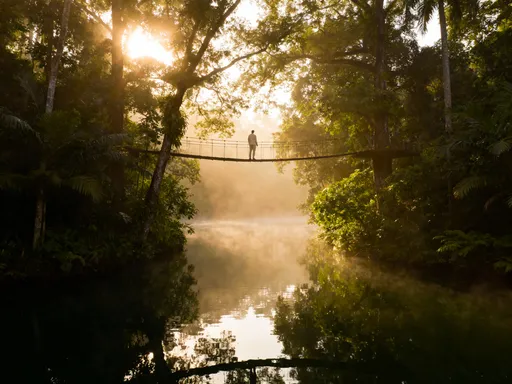
The contrast is striking. On one side, the untamed jungle presses close, vines creeping toward sidewalks and palm fronds brushing against rooftops. On the other, European-inspired architecture rises with a quiet dignity, as if refusing to be swallowed by the green. Stilt houses line the riverbanks, home to families whose lives are tied to the water, while just a few blocks inland, grand homes with wraparound balconies and ornate railings speak of a different era — one of wealth, cosmopolitan dreams, and global connection. It’s this duality that defines Iquitos: a city suspended between wilderness and civilization, between past glory and present resilience.
Visitors often expect a jungle town to be simple, perhaps even primitive. But Iquitos defies that assumption. Its architecture is a testament to human ambition — to build something lasting in a place where the environment fights back. The wooden beams, though warped by decades of humidity, still hold. The tin roofs, dented by storms, still shelter. And the city, though remote, pulses with culture, commerce, and history. To walk its streets is to witness a rare urban form — one that evolved not in opposition to nature, but in conversation with it.
The Legacy of the Rubber Boom: How Wealth Shaped the City
To understand Iquitos’ architecture, one must travel back to the late 1800s, when rubber was more valuable than gold. The Amazon was the world’s primary source of natural latex, and Iquitos sat at the heart of this boom. Almost overnight, the city transformed from a small riverside settlement into a wealthy, cosmopolitan hub. Ships arrived from Europe carrying luxury goods, and fortunes were made by those who controlled rubber extraction. With wealth came aspiration — and a desire to build a city that looked and felt like Paris, London, or New Orleans.
This dream left a permanent mark on Iquitos’ skyline. Wealthy rubber barons imported materials and architectural ideas from abroad, blending them with local techniques and materials. French-style mansions appeared, complete with wrought-iron balconies and tall, arched windows. English tiles covered roofs, and American-designed ventilation systems were installed to combat the heat. The most famous example is the Iron House, or Casa de Fierro, often attributed to Gustave Eiffel — the same engineer behind the Eiffel Tower. Whether or not Eiffel himself designed it, the structure was prefabricated in Europe, shipped in pieces across the Atlantic and up the Amazon, and assembled on-site. Its metal frame was revolutionary for the time, resistant to fire, insects, and rot — a symbol of modernity in a rainforest city.
But the rubber boom was not just about imported materials — it was about cultural fusion. Local carpenters, many of Indigenous or mestizo heritage, adapted European designs using Amazonian hardwoods like cedar and mahogany. They carved intricate balustrades, built wide verandas, and created interior layouts suited to tropical living. The result was a unique architectural hybrid — neither fully European nor entirely local, but something new. These buildings were not mere copies; they were reinterpretations, shaped by the hands and knowledge of those who built them.
Today, walking through the historic center of Iquitos, you can still see the legacy of that era. Though many mansions have fallen into disrepair, their outlines remain — grand staircases leading to empty porches, stained-glass windows peeking through overgrown gardens. The boom ended abruptly in the early 20th century when rubber production shifted to Southeast Asia, but the buildings endured. They stand as monuments not just to wealth, but to the brief moment when Iquitos believed it could be a world capital — and almost convinced itself it was.
Wood, Iron, and Air: Designing for the Amazon
Architecture in Iquitos is not just about beauty — it is about survival. The Amazon environment is unforgiving: high humidity, torrential rains, seasonal flooding, and relentless insect activity. A building that cannot breathe, drain, or resist decay will not last. And yet, many of Iquitos’ historic structures have stood for over a century. How? Through a series of intelligent, adaptive design choices that blend form and function in perfect harmony.
One of the most visible features is the raised foundation. Most older homes sit on stilts or brick piers, lifting the living space above ground level. This protects against flooding during the rainy season, when parts of the city can be submerged for weeks. It also improves airflow beneath the house, reducing dampness and deterring pests. The space underneath is often used for storage, parking, or even small workshops — a practical use of what might otherwise be wasted area.
Roofs are another key adaptation. They are typically steeply pitched and extend far beyond the walls, creating deep overhangs that shield windows and walls from rain. Many are made of corrugated metal, which sheds water quickly and reflects heat. Beneath, wide eaves provide shaded outdoor space — perfect for sitting in the evenings when the day’s heat begins to fade.
Windows and ventilation are equally important. Traditional homes feature louvered shutters that can be adjusted to control airflow while keeping out rain and insects. Interior layouts are designed to promote cross-ventilation, with doors and windows aligned to catch breezes. High ceilings allow hot air to rise, while transom windows above doors release it. In some homes, interior courtyards act as natural cooling chambers, drawing air through the house like a lung.
Materials are chosen with care. Hardwoods like cedar and lapacho are naturally resistant to rot and termites, making them ideal for structural beams and flooring. Iron, when used, is often painted regularly to prevent rust. Even decorative elements — such as carved railings or ornate cornices — are designed with airflow in mind, their open patterns allowing wind to pass through.
These features are not accidental. They represent generations of accumulated knowledge — a deep understanding of how to live with, rather than against, the jungle. In a world increasingly focused on artificial cooling and synthetic materials, Iquitos offers a lesson in sustainable, climate-responsive design. The buildings here do not rely on air conditioning or sealed environments. Instead, they breathe, adapt, and endure — quietly proving that the best architecture listens to its surroundings.
Hidden Gems: Courtyards, Churches, and Forgotten Mansions
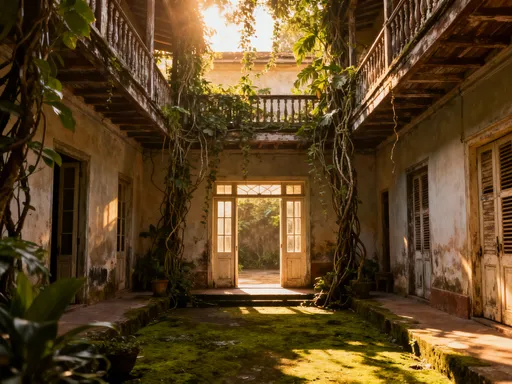
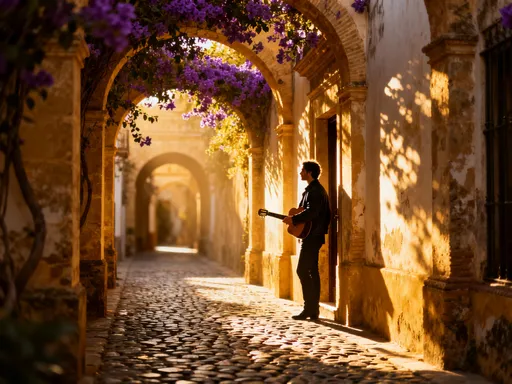
Beyond the main avenues and tourist spots, Iquitos holds quieter treasures — places that reveal the soul of the city not through grandeur, but through intimacy and resilience. Tucked behind unassuming facades, you’ll find hidden courtyards where bougainvillea spills over brick walls and potted plants thrive in dappled sunlight. These inner gardens were once the heart of family life, spaces for gathering, cooking, and storytelling. Today, some have been restored, while others remain private, known only to those who live there.
Churches, too, tell a story of adaptation. The Cathedral of Iquitos, with its neoclassical façade and twin towers, stands in the central plaza, but step inside and you notice the details: wooden altars carved with tropical motifs, ceiling beams made of Amazonian hardwood, and stained glass that filters the jungle light into soft, colored pools on the floor. Other smaller churches, like San Juan Bautista in the Belén district, blend baroque elements with local craftsmanship — iron crosses forged by hand, wooden pews worn smooth by generations of worshipers.
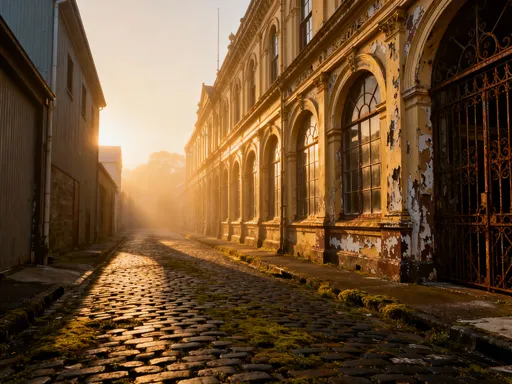
Then there are the forgotten mansions — silent witnesses to the city’s past. Some stand abandoned, their windows boarded, paint peeling, vines creeping up the walls. Yet even in decay, their elegance remains. A broken balcony with an intact iron scrollwork design. A front door with a brass knob still shining. These buildings are not ruins; they are in transition, caught between memory and possibility.
But not all stories end in neglect. Some homes have been lovingly restored, transformed into boutique guesthouses, cafés, or cultural centers. One such place is a former rubber baron’s residence turned literary café, where books line the walls and guests sip coffee beneath ceiling fans that spin slowly in the afternoon heat. Another is a community museum housed in a century-old home, where local historians display photographs, tools, and personal stories from Iquitos’ past. These projects do more than preserve wood and metal — they keep history alive in a way that is accessible, meaningful, and human.
Living Architecture: How Locals Adapt and Preserve
In Iquitos, historic buildings are not frozen in time — they are lived in, used, and adapted. Many homes in the central neighborhoods have been passed down through families for generations. Grandmothers sit on front porches fanning themselves, children play in the shaded courtyards, and meals are cooked in kitchens that have seen decades of use. These are not museum pieces; they are homes, full of life and memory.
At the same time, change is inevitable. The pressures of urban growth, climate, and economic shifts challenge the survival of old structures. Wood rots. Roofs leak. Flooding damages foundations. In some areas, older homes are being replaced with modern concrete buildings that may be cheaper to maintain but lack character and climate sensitivity. The risk is not just the loss of beauty, but the erosion of cultural identity.
Yet, there is hope. Across the city, small-scale preservation efforts are gaining momentum. Local architects and heritage advocates are working with homeowners to restore buildings using traditional methods and materials. Some projects are supported by cultural grants, while others are community-driven — neighbors helping neighbors repair a roof or repaint a façade. In Belén, a floating neighborhood built on stilts above the river, residents have developed innovative ways to maintain wooden homes despite constant water exposure, using elevated walkways and modular construction techniques.
What makes these efforts special is their authenticity. There is little interest in forced gentrification or turning historic districts into tourist zones. Instead, the focus is on maintaining the character of the city while allowing it to evolve naturally. A restored home might become a family-run hostel, offering visitors a chance to experience Iquitos from the inside. An old warehouse could be converted into a craft market, where local artisans sell handmade goods. These adaptations keep the buildings relevant, ensuring they remain part of daily life rather than relics of the past.
The people of Iquitos understand something essential: preservation is not about stopping time. It is about honoring the past while building a future that respects it. Their quiet dedication — repainting a railing, repairing a shutter, planting a garden — is a form of love, written in wood and iron.
Walking Tours That Tell Stories: The Best Way to Experience the City’s Soul
To truly understand Iquitos’ architecture, you must walk its streets — slowly, thoughtfully, with someone who knows its stories. Guided walking tours, led by local historians, architects, or longtime residents, offer the most immersive way to explore. These are not hurried sightseeing loops, but narrative journeys that connect buildings with the people who built, lived in, and preserved them.
One of the most rewarding routes begins in Plaza de Armas, the city’s main square. From there, you move through the historic center, passing the Iron House, the old theater, and a series of grand homes with names long forgotten. A knowledgeable guide will point out subtle details — the way a window is angled to catch the breeze, the type of wood used in a doorframe, the significance of a particular carving. You’ll learn not just what the buildings are, but why they were built that way.
Another powerful experience is a visit to Belén, often called the “Venice of the Amazon.” Here, homes rise on stilts above the water, connected by wooden walkways that sway slightly with each step. A local guide will explain how families adapt to seasonal flooding, how they fish from their porches, and how they maintain their homes in such a challenging environment. It’s a humbling reminder that architecture is not just about design — it’s about resilience.
Timing matters. The best light for seeing Iquitos’ architecture is late afternoon, when the sun slants low, casting long shadows across cobblestone streets and illuminating the textures of wood and metal. This is also when the city slows down — vendors pack up, children return from school, and families gather on porches. The air hums with conversation and the scent of cooking food. It’s in these quiet moments that the city feels most alive, its history not in the past, but in the present.
For those who want a deeper connection, some tours include visits to private homes or community projects. You might sip tea with a family in their courtyard, listen to a local musician play in a restored parlor, or help plant flowers in a shared garden. These experiences go beyond observation — they create connection, empathy, and understanding.
Why This Matters: Preserving Cultural Identity in a Changing Amazon
The architecture of Iquitos is more than a collection of old buildings. It is a living record of cultural fusion, economic transformation, and human adaptation. It tells the story of a city that once dreamed of being a global capital, that survived the collapse of its main industry, and that continues to thrive in one of the most challenging environments on Earth. In an era of rapid urbanization and environmental change, these structures are not just beautiful — they are essential.
They remind us that cities can grow without losing their soul. That modernity does not have to mean concrete and glass. That it is possible to build in harmony with nature, using local materials and time-tested techniques. In a world increasingly shaped by climate uncertainty, Iquitos offers a model of resilience — one rooted in observation, adaptation, and respect for place.
But preservation requires attention. It requires investment, care, and, most importantly, respect. Tourists can play a role by choosing to stay in locally run guesthouses, supporting community-led tours, and traveling with curiosity rather than consumption. When you walk through Iquitos with awareness, you do more than see a city — you honor it.
The wooden beams may creak. The paint may peel. But the spirit of Iquitas endures. In every courtyard, every balcony, every hand-carved railing, there is a quiet invitation: to slow down, to listen, to appreciate the beauty of a place that refuses to be forgotten. Let us answer that call — not as outsiders, but as guests, ready to learn from a city where the jungle and history walk hand in hand.