Soul of the South: Where Flamenco, Tiles, and Timeless Streets Come Alive
Seville isn’t just a city—it’s a feeling. The moment you step into its sun-drenched plazas, the rhythm of flamenco pulses through the air, and every cobblestone tells a story. I was hooked from the first bite of crispy tortillitas de camarones and the golden glow of the Alcázar at sunset. This is Andalusia at its most authentic: passionate, colorful, and deeply rooted in tradition. If you're craving culture that lives—not just museums but music, food, and soul—Seville delivers in every alleyway and hidden courtyard. It’s a city where history breathes through ornate gates, where the scent of orange blossoms drifts on warm breezes, and where life unfolds not behind glass but in open patios, bustling markets, and twilight songs beneath ancient walls.
The Heartbeat of Andalusia: Why Seville Feels Like No Other City
Seville stands apart not only for its beauty but for its soul. Unlike cities that preserve culture within museum walls, Seville wears its heritage like a second skin—visible in the curve of a tile, the strum of a guitar, the laughter echoing through a sunlit plaza. Its identity has been shaped over centuries by the convergence of civilizations: the Moors who ruled for 500 years, the Christian kingdoms that reclaimed the city in 1248, and the Roma (Gypsy) communities whose artistry gave birth to flamenco. This blend is not a relic of the past but a living rhythm that pulses through daily life.
From the moment you arrive, Seville greets you with sensory richness. The air carries the sweet perfume of blooming orange trees, especially in spring when the narrow streets of Santa Cruz seem dusted with fragrance. Around corners, you might hear the sudden burst of a flamenco singer’s voice or the soft pluck of a nylon-string guitar from an open window. Sunlight bounces off whitewashed walls, warming the stone underfoot, while wrought-iron balconies overflow with geraniums in fiery reds and pinks. These are not staged performances for tourists—they are the ordinary moments of a city deeply in love with its own rhythm.
What makes Seville truly unique is how its traditions remain woven into the fabric of everyday life. Locals still gather in the late afternoon in Plaza de España or Plaza de Santa Cruz, not because it’s picturesque, but because it’s where they’ve always met. Children play near fountains, elders sip coffee at corner bars, and neighbors exchange news over glasses of fino sherry. There’s a warmth here that can’t be replicated—a sense of belonging that extends, gently, to visitors who come not to rush but to absorb. In Seville, culture isn’t observed; it’s lived.
This authenticity is rare in a world of curated travel experiences. While other historic cities cater heavily to tourism, Seville maintains its essence because its people do. The festivals, the food, the music—they aren’t for show. They are expressions of identity, passed down through generations. To walk through Seville is to step into a living tradition, one that invites you not to watch, but to listen, to taste, and, in your own quiet way, to participate.
Alcázar: A Palace Where Centuries Dance Together
The Real Alcázar of Seville is more than a palace; it is a testament to the harmony of time, art, and culture. As one of the oldest royal residences still in use in Europe—though its official functions are ceremonial today—it embodies centuries of transformation. Originally built as a fort by the Moors in the 10th century, it was expanded during the 14th century under King Pedro I, who blended Islamic craftsmanship with Christian symbolism in a way that feels neither forced nor political, but poetic. Walking through its gates is like stepping into a living manuscript of Andalusian history, where every arch, fountain, and tile tells a story of coexistence and creativity.
The heart of the Alcázar lies in its courtyards, especially the famed Patio de las Doncellas. Named for a legend of tribute maidens, this serene space is framed by delicate stucco arches, intricate cedar wood ceilings, and shimmering tilework in cobalt, gold, and emerald. The craftsmanship reflects the height of Nasrid artistry, reminiscent of the Alhambra in Granada, yet with its own distinct voice. Water flows quietly through channels and pools, offering both beauty and cooling relief from the Andalusian sun. The surrounding gardens, some of Europe’s finest examples of Islamic landscaping, unfold in terraces of myrtles, orange trees, and climbing jasmine, their scents mingling in the breeze.
Visiting the Alcázar is best done early in the morning, when sunlight filters gently through the lattice work and crowds are still thin. This is when the palace feels most alive—not as a monument, but as a space of quiet contemplation. Guided tours are highly recommended for those who wish to understand the symbolism hidden in the tile patterns and carvings, many of which contain poetic inscriptions or geometric designs rooted in mathematical precision. The use of repetition and symmetry is not merely decorative; it reflects a worldview where order and beauty are divine principles.
The Alcázar’s designation as a UNESCO World Heritage Site is not just an honor—it is a commitment to preservation. Unlike some historic sites that become frozen in time, the Alcázar continues to evolve, with ongoing restoration projects ensuring that its delicate stucco and fragile tiles are protected without losing their authenticity. Seasonal highlights, such as the peak of orange blossom in April or the golden light of late afternoon in autumn, offer ever-changing views. To walk here is to witness history not as a static display, but as a continuing dialogue between past and present.
Cathedral & Giralda: Climbing History with a View
Rising above Seville’s skyline, the Cathedral of Saint Mary of the See is the largest Gothic cathedral in the world, a monumental expression of faith, power, and artistry. Built between the 15th and 16th centuries on the site of a former mosque, it stands as a symbol of the Christian Reconquista, yet its design and presence reflect the deep cultural layers of the city. The sheer scale is awe-inspiring: five naves, 80 chapels, and a central altar adorned with gold leaf and religious iconography. But beyond its religious significance, the cathedral is a masterpiece of architectural ambition, where light filters through stained glass and silence seems to hang in the vaulted ceilings.
Equally remarkable is the Giralda, the cathedral’s bell tower, originally constructed as a minaret for the Almohad mosque in the 12th century. After the Christian conquest, it was preserved and crowned with a Renaissance belfry and a weather vane statue known as “La Giraldilla,” which gives the tower its name. What makes the ascent so special is that it’s done via a gentle ramp, originally designed for horsemen, allowing visitors to climb 35 floors without stairs. Each turn offers a new glimpse of the city below—red-tiled roofs, winding alleys, the green ribbon of the Guadalquivir River.
Reaching the top rewards you with a panoramic view that stretches across Seville, especially breathtaking at sunrise or golden hour. From this vantage point, you can trace the city’s layout, see the patchwork of neighborhoods, and understand how the Alcázar, the cathedral, and the old city walls form a cohesive historical core. It’s a moment of quiet reflection, where the bustle of the streets fades into a tapestry of light and shadow.
Inside the cathedral, one of the most visited sites is the tomb of Christopher Columbus, held aloft by four figures representing the ancient kingdoms of Spain. While the historical details of Columbus’s legacy are complex, the monument itself is a powerful example of 19th-century funerary art. Visitors are encouraged to explore the chapels at a leisurely pace, many of which house works by Spanish masters like Murillo. To avoid long lines, booking a timed entry ticket in advance is strongly advised, especially during peak seasons. Early morning visits offer not only shorter queues but also softer light for photography, when the interior glows with a golden warmth.
Santa Cruz: Getting Lost in the Soul of the Old City
If Seville has a heartbeat, it pulses strongest in Santa Cruz, the former Jewish quarter nestled within the old city walls. Once home to a thriving Jewish community before the 15th-century expulsions, Santa Cruz today is a maze of narrow, winding streets, whitewashed houses, and flower-filled patios that open like secret gardens to the sky. This is not a district designed for efficiency—it’s designed for discovery. The best way to experience it is without a map, allowing yourself to get pleasantly lost among alleyways that seem to shift with the light, revealing fountains, tiled benches, and sudden plazas where time slows down.
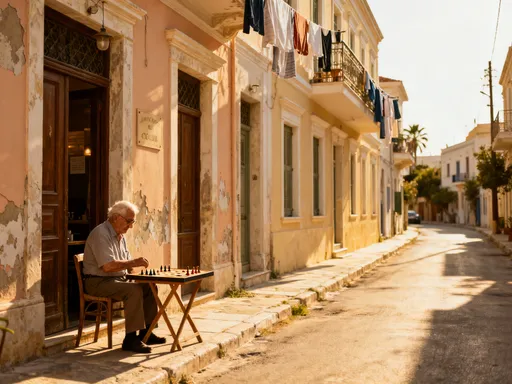
Each turn offers a new vignette: a wrought-iron gate half-open, revealing a courtyard drenched in bougainvillea; a small bodega where an old man sips wine and reads the paper; a patch of sunlight hitting a blue door adorned with a brass lion knocker. These are the moments that define Santa Cruz—not grand monuments, but intimate details that speak of daily life. The neighborhood retains a residential soul, even as tourists wander its lanes. Locals still hang laundry between buildings, water potted plants from balconies, and gather in small groups to talk in the evenings.
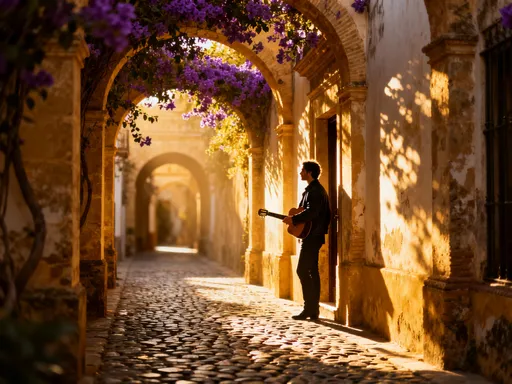
For those seeking hidden gems, a few quiet spots remain off the main paths. One might stumble upon a small tile workshop where artisans hand-paint traditional azulejos, each piece a miniature work of art. Or a family-run bodega tucked into a corner, where the owner plays guitar after dinner and invites guests to join in a spontaneous song. These encounters are not performances—they are glimpses into a culture that values connection, music, and the simple joy of sharing a meal.
While Santa Cruz is undeniably popular, visiting at the right time can preserve its magic. Early mornings, just after sunrise, are ideal—when the streets are quiet, the air is cool, and the light paints the walls in soft gold. Late evenings, after the day-trippers have left, also offer a more intimate experience. During these hours, the neighborhood feels like it returns to its residents, its rhythm slowing to a gentle pace. To walk Santa Cruz at such moments is to feel, briefly, like you’ve been let in on a secret—one the city guards tenderly, yet shares generously with those who listen.
Flamenco: More Than a Show—It’s a Language
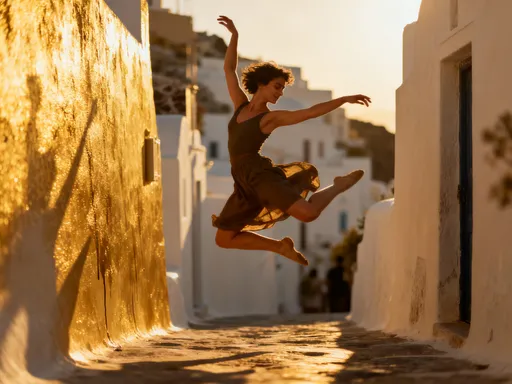
Flamenco is not merely music or dance—it is emotion made audible. Born in the Roma communities of Andalusia, it emerged from centuries of hardship, resilience, and cultural fusion, blending Moorish melodies, Jewish liturgical chants, and Spanish folk traditions into a raw, powerful art form. In Seville, flamenco is not confined to stages; it lives in the soul of the people. To witness it is to understand that it is not entertainment, but expression—a way of speaking when words are not enough.
For the most authentic experience, intimate venues known as *tablaos* are far more moving than large-scale productions. Places like Casa de la Memoria offer close-up performances where you can see the sweat on a singer’s brow, feel the tremor in a guitarist’s fingers, and hear the sharp clap of palmas (hand percussion) reverberate in the small space. There is no barrier between artist and audience—only shared breath and emotion. The cante (singing) often begins with a deep, mournful cry, building into a crescendo of passion that can leave listeners breathless.
What sets true flamenco apart is its spontaneity. Unlike choreographed shows, performances here unfold in the moment, guided by feeling rather than script. Dancers stomp with fierce precision, their feet creating rhythms as complex as any drum. The guitar is not accompaniment but conversation, responding to every shift in voice and movement. And while joy exists in flamenco—especially in lighter forms like alegrías—its core lies in *duende*, a Spanish term for the spirit of deep emotion that transcends technique.
Visitors are encouraged to approach flamenco with respect. Flash photography is discouraged, not only because it distracts but because it violates the intimacy of the moment. Applause should come naturally, not out of obligation. Most importantly, one should listen—not just with ears, but with heart. To experience flamenco in Seville is not to watch a performance, but to be invited into a centuries-old conversation about love, loss, and the fire of being alive.
Festivals That Define the Year: From Semana Santa to Feria
In Seville, the calendar is not marked by months, but by festivals—moments when the entire city pauses, dresses up, and pours into the streets with shared purpose. Two stand above the rest: Semana Santa (Holy Week) and the Feria de Abril (April Fair). Though rooted in religious and cultural tradition, they are best understood as expressions of community, identity, and joy in all its forms.
Semana Santa is a week of profound solemnity and beauty. Each evening, brotherhoods from different neighborhoods carry elaborately decorated floats—called *pasos*—through the streets, depicting scenes from the Passion of Christ. Accompanied by marching bands playing mournful music and penitents in traditional robes and pointed hoods (a symbol of humility, not secrecy), the processions move with slow, hypnotic rhythm. The air is thick with incense, candlelight flickers on stone walls, and silence often falls as a paso passes. It is not a spectacle, but a devotional act—one that draws both locals and respectful visitors into a shared moment of reflection.
In contrast, the Feria de Abril is an explosion of color, music, and life. Held two weeks after Easter, it transforms the city into a festival ground along the Prado de San Sebastián, where hundreds of marquee tents—*casetas*—are erected by families, clubs, and organizations. By day, women wear traditional flamenco dresses in bold polka dots and ruffles, men don suits and hats, and horseback riders parade through the fairgrounds in a grand opening procession. By night, the casetas come alive with singing, dancing, and endless rounds of tapas and sherry. Unlike Semana Santa, the Feria is open and inclusive—many casetas welcome visitors, offering food, drink, and a chance to dance sevillanas, the local folk dance.
Experiencing both festivals offers a powerful contrast: one inward and reflective, the other outward and celebratory. For travelers, participation is possible with sensitivity. During Semana Santa, quiet observation from the sidelines is appropriate; during the Feria, a friendly smile and polite inquiry can open doors to hospitality. Both events reveal a truth about Seville: that its culture is not static, but cyclical—returning each year with renewed meaning, connecting generations through ritual and joy.
Taste of Tradition: Food as Cultural Expression
To know Seville is to taste it. The city’s cuisine is not an afterthought—it is a central pillar of its identity, shaped by climate, history, and the rhythms of daily life. Meals are late, social, and deeply satisfying, built around fresh ingredients, bold flavors, and the art of the shared table. From the first sip of chilled salmorejo to the last bite of fried fish, every dish tells a story of Andalusia’s land and people.
Start with salmorejo, Seville’s richer cousin to gazpacho. Made from ripe tomatoes, bread, olive oil, and garlic, it’s served cold and topped with chopped hard-boiled egg and jamón ibérico. It’s a dish born of necessity—using stale bread to thicken the soup—but elevated to comfort food perfection. Equally iconic is espinacas con garbanzos, a Moorish-inspired stew of spinach and chickpeas, often enjoyed as a tapa. Fried fish, especially pescaíto frito, is a staple, best sampled in the bars of El Arenal or Triana, where it emerges golden and crisp from sizzling oil.
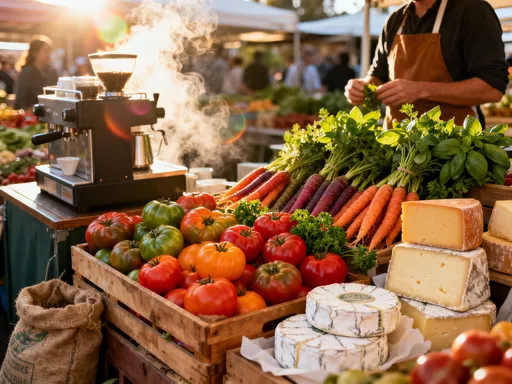
For the full experience, visit Mercado de Triana, a bustling indoor market where locals shop for fresh produce, cheese, and seafood. The market is a microcosm of Sevillian life—vendors call out specials, grandmothers inspect artichokes, and the scent of garlic and paprika fills the air. It’s also a great place to sample tapas at small counters, where you can try tortillitas de camarones, delicate fritters made with tiny shrimp, especially popular in spring.
Dining in Seville follows a distinct rhythm. Lunch begins around 2 p.m., dinner not until 9 or 10 p.m., and tapas hopping—moving from bar to bar, sampling small plates—is a cherished social ritual. Pair your meal with a glass of local fino or manzanilla sherry, or a tinto de verano, a refreshing red wine cooler. The pace is slow, the conversation long, the experience rich. In Seville, food is not fuel—it is connection, celebration, and memory in every bite.
Why Seville Stays With You
Seville does not reveal itself all at once. Its magic unfolds slowly—in the pause between guitar notes, in the shadow of an archway at dusk, in the warmth of a shared smile at a crowded bar. It is not a city that can be conquered in a checklist of sights, but one that must be felt, absorbed, and carried within. What lingers long after departure is not just the image of golden palaces or flamenco’s fiery cry, but the sense of having touched something real—a culture that lives not for tourists, but for itself.
This is the rarest gift a destination can offer: authenticity. In Seville, tradition is not preserved behind glass but passed down in kitchens, courtyards, and songs. To visit is not to observe, but to participate—to let the rhythm of the city reshape your own. Whether you’re sipping sherry in a hidden plaza, wandering aimlessly through Santa Cruz, or standing in awe beneath the Giralda’s summit, you are not just a guest. You are, for a moment, part of the story.
So let yourself slow down. Let the heat teach you patience. Let the music move you, even if you don’t understand the words. Let the food remind you of the joy of sharing. Seville doesn’t end when you leave—it begins again in your memory, in the quiet moments when you close your eyes and hear the echo of a guitar, smell the ghost of orange blossoms, and feel, once more, the sun on your face.