Wandering Through Mumbai’s Soul: Where Architecture Tells the City’s Story
You know what’s wild? Walking through Mumbai and realizing every building has a voice. From colonial-era grandeur to bold Art Deco curves, the city’s streets are an open-air museum. I wandered without a map, letting the architecture guide me—each turn revealed a new era, a different dream. It’s not just about old buildings; it’s how they live and breathe alongside modern chaos. This is Mumbai, unfiltered. The city doesn’t hide its past behind velvet ropes or museum glass. Instead, history pulses through its footpaths, train platforms, and temple courtyards. Every facade tells a story of resilience, adaptation, and coexistence. To walk through Mumbai is to move through time, where Gothic spires rise beside tropical modernism and ancient stone shrines stand shoulder to shoulder with glass towers. This is a city shaped by centuries of change, yet rooted in continuity. And its architecture—layered, vibrant, and deeply human—offers a rare kind of truth about who Mumbaikars are and how they’ve lived.
The First Step: Arrival in South Mumbai – A Clash of Eras
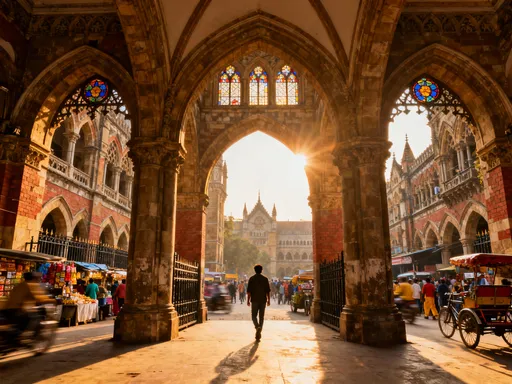
Arriving in South Mumbai through Chhatrapati Shivaji Maharaj Terminus (CSMT), formerly known as Victoria Terminus, is like stepping into a living time capsule. The station, a UNESCO World Heritage Site, stands as a breathtaking fusion of Victorian Gothic architecture and Indian craftsmanship. Completed in 1887, its high domes, pointed arches, and ornate stone carvings were designed by British architect F.W. Stevens, yet every detail reflects local artistry. The woodwork is hand-carved by Indian artisans, the stone quarried from nearby regions, and the motifs subtly infused with Indian flora and fauna. What strikes most is not just its beauty, but its function: this is not a preserved relic, but one of the busiest railway stations in India, serving over three million commuters daily. The same corridors that once echoed with British officials now buzz with office workers, students, and vendors, all moving through history without pausing to admire it.
The emotional weight of this place is palpable. One can almost hear the footsteps of the past—train porters in khaki uniforms, colonial administrators with leather briefcases, and early Indian professionals navigating a city under imperial rule. Yet today, the station is thoroughly democratic. A woman in a sari waits for her train beneath a stained-glass window depicting colonial-era progress, while a young man in jeans leans against a carved stone pillar, scrolling through his phone. The building, once a symbol of imperial power, has been reclaimed by the people. Its endurance is not just architectural but cultural—a testament to how Mumbai absorbs and repurposes its past. The station sets the tone for everything that follows: in this city, history is not frozen. It is worn, lived in, and continuously rewritten by those who pass through it.
What makes CSMT so powerful is its refusal to be merely decorative. Unlike many colonial buildings turned into museums or government offices, this one remains deeply embedded in everyday life. Its survival through decades of urban expansion, monsoon rains, and heavy use speaks to the resilience of both the structure and the city. The fusion of styles—Gothic spires, Indian domes, and Victorian planning—mirrors Mumbai’s own identity: hybrid, dynamic, and constantly negotiating between tradition and modernity. To begin a journey here is to understand that Mumbai’s soul is not in its skyline or its wealth, but in its ability to let history function, to let the old serve the present. That is the first lesson the city teaches: architecture is not just about aesthetics, but about continuity.
Walking Through Time: From Fort to Flats – The Evolution of a Cityscape
Leaving the station, the walk north into the Fort area unfolds like a timeline of urban development. The name 'Fort' refers to the original British military compound that once stood here, now long gone, but its legacy lingers in the grid-like streets and the imposing public buildings that line them. Among the most striking is the Bombay High Court, its red-and-buff stone exterior and pointed arches drawing directly from the Indo-Saracenic revival style. This architectural movement, popular in the late 19th century, sought to blend Islamic, Hindu, and Gothic elements into a unified colonial aesthetic. The result is a kind of architectural diplomacy—structures that acknowledged local traditions while asserting British authority. The High Court’s domes resemble Mughal mausoleums, its courtyards evoke palace architecture, yet its function was distinctly imperial.
Just a few blocks away, the University of Mumbai’s Rajabai Clock Tower rises with a more overtly Victorian grandeur. Modeled after Big Ben, its intricate stonework and tall spire were meant to symbolize enlightenment and order. Inside, the library once housed colonial-era records and academic texts, serving as a center of Western education. Today, students from all backgrounds study beneath its vaulted ceilings, a quiet reversal of the power dynamics embedded in its foundation. These buildings, once exclusive spaces of administration and elite learning, now serve a far more diverse public. Their original meanings have softened, their symbolism absorbed into the city’s broader narrative.
The urban planning of this area reflects a clear hierarchy: wide roads, symmetrical layouts, and elevated buildings designed to impress and control. Yet today, that order is softened by chaos. Street vendors line the sidewalks, delivery bikes weave through traffic, and families gather on benches beneath centuries-old trees. The contrast between the rigid colonial design and the organic flow of modern life reveals how architecture, no matter how imposing, cannot contain the spirit of a city. Pedestrians don’t walk around these buildings with reverence—they walk through them, past them, beside them, treating them as part of the daily rhythm. This is the quiet power of Mumbai: it democratizes space. The buildings remain, but their meaning shifts. They are no longer symbols of power, but landmarks in a shared landscape.
What emerges from this journey is a deeper understanding of how architecture reflects social change. The Fort area was designed to project authority, yet now it pulses with democratic energy. The same streets that once echoed with military parades now carry the sounds of street food sizzles and schoolchildren laughing. This transformation is not accidental—it is the result of decades of adaptation, of people making space for themselves within structures not built for them. In Mumbai, the cityscape is not static. It evolves with its people. And in that evolution, the past doesn’t disappear—it becomes part of the present’s texture.
Art Deco Magic: Mumbai’s Hidden Architectural Gems Along Marine Drive
A short walk west from the Fort leads to one of Mumbai’s most iconic vistas: Marine Drive, the sweeping promenade that curves along the Arabian Sea. By day, it’s a ribbon of concrete and sea views; by night, it glows under streetlights that resemble pearls. But beyond the postcard scenery lies one of the world’s largest collections of Art Deco architecture, second only to Miami. Built primarily in the 1930s, these residential buildings showcase the streamlined elegance of a global movement that found a natural home in a tropical coastal city. Their curved balconies, geometric patterns, and nautical motifs—ship railings, porthole windows, wave-like stucco—speak to a moment of optimism and modernity.
The style thrived here for practical and cultural reasons. The curved facades help catch sea breezes, a passive cooling method ideal for Mumbai’s humid climate. Flat roofs were adapted for rooftop living, where families gather in the evenings to escape the heat. Sunburst motifs and zigzag patterns, common in Art Deco design, were not just decorative—they symbolized progress and energy, ideals that resonated with a growing Indian middle class eager for modernity. These buildings were not for the elite but for professionals, teachers, and civil servants—people who wanted comfort, style, and a connection to the sea. Their scale is human, their details thoughtful, their presence unpretentious.
Today, these buildings remain homes, not museums. Residents hang laundry from Art Deco railings, children play in lobbies with geometric tile floors, and old men sip tea on curved balconies overlooking the water. The architecture is not preserved behind glass; it is used, loved, and slightly worn. Some buildings have been renovated with care, their original colors restored—creams, teals, and corals that pop against the gray sky. Others show signs of age, their stucco cracked, their paint faded. Yet even in decline, they retain their grace. The city has recognized their value: in 2018, the Art Deco precinct along Marine Drive was granted heritage status, protecting it from demolition and inappropriate alterations.
What makes this district so special is its livability. Unlike grand monuments that feel distant, these buildings are intimate. They were designed for daily life, and that purpose endures. To walk along Marine Drive is to see history not as spectacle, but as home. The Art Deco era may have been brief, but its legacy is deeply woven into the city’s fabric. It represents a moment when Mumbai looked forward, embracing global styles while adapting them to local needs. That spirit of innovation and practical beauty continues to inspire architects and residents alike.
Religious Harmony in Stone and Steel: Temples, Mosques, and Churches Side by Side
Mumbai’s architectural diversity is perhaps most vividly expressed in its places of worship. Within a few square kilometers, one can find Hindu temples with intricate stone carvings, Islamic mosques with elegant domes and minarets, and Christian churches with stained glass and bell towers. The Haji Ali Dargah, a white marble mosque and shrine, sits on a causeway that appears to float on the sea at high tide. Its domes and arched entrances reflect Indo-Islamic design, while its location—accessible only when the tide is low—adds a spiritual dimension to the journey. Pilgrims of all faiths visit, drawn by its peaceful aura and architectural beauty. The site is not just a place of prayer but a symbol of Mumbai’s openness, where devotion transcends religious boundaries.
Not far away, the Siddhivinayak Temple, dedicated to Lord Ganesha, stands in the bustling area of Prabhadevi. Its golden dome and detailed stone work attract thousands daily. The temple’s architecture is traditional Hindu, with a sanctum surrounded by a pillared hall and an outer courtyard for gatherings. The design emphasizes accessibility and community—wide entrances, open spaces, and ritual pathways that guide movement. Similarly, Mount Mary Church in Bandra, with its white facade and twin towers, draws crowds during the annual Bandra Fair. Its Portuguese-influenced design—arched windows, bell tower, and courtyard—reflects Mumbai’s colonial Catholic history. Yet today, it is a place of shared celebration, where families picnic on the surrounding hill, enjoying views of the city.
What is remarkable is how these sacred spaces coexist in close proximity, often within walking distance of one another. In many cities, religious buildings are segregated by neighborhood or community, but in Mumbai, they stand side by side, sometimes sharing streets or plazas. This physical closeness fosters a quiet culture of mutual respect. Architectural styles remain distinct—each faith’s values expressed through form and detail—but their presence in the same urban fabric creates a visual language of harmony. The city does not erase difference; it accommodates it. Domes, spires, and shikharas rise together, not in competition, but in coexistence.
The design of these buildings also reflects their role as community centers. Courtyards serve as gathering spaces, arcades provide shade, and entrances are wide to accommodate crowds. This emphasis on openness and accessibility mirrors Mumbai’s broader ethos: a city that makes room for everyone. Even in dense, crowded neighborhoods, places of worship offer moments of stillness and beauty. Their architecture is not just symbolic—it is functional, serving both spiritual and social needs. In a city of constant movement, these spaces anchor the community, offering continuity and comfort.
Living Heritage: Chawls, Towers, and the Architecture of Everyday Life
Beyond monuments and religious sites, Mumbai’s true architectural heart lies in its housing. The chawl, a colonial-era tenement building, is one of the city’s most enduring social housing forms. Typically two or three stories high, with shared toilets and communal courtyards, chawls were built for mill workers in the 19th century. Their design is simple: rows of small rooms opening onto a common veranda, with staircases connecting floors. What these buildings lack in privacy they make up for in community. Neighbors cook together, children play in hallways, and elders sit on steps sharing stories. The architecture fosters intimacy, born not of design intent but of necessity.
Today, many chawls remain, though some have been redeveloped into high-rises. The tension between preservation and progress is evident. On one hand, chawls represent a vanishing way of life, a model of dense, communal living that modern apartments often lack. On the other, they suffer from overcrowding, poor maintenance, and inadequate infrastructure. Yet residents often resist relocation, not just for economic reasons but because of the deep social bonds these spaces nurture. The chawl is more than a building—it is a social ecosystem.
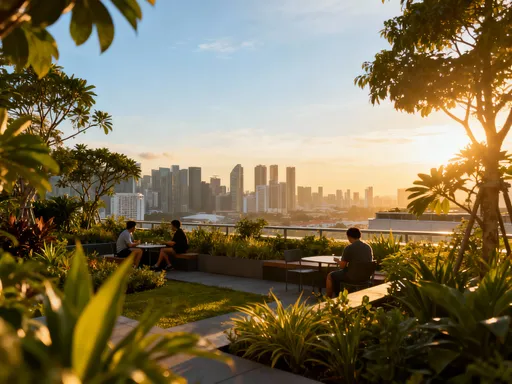
In contrast, the modern high-rises of South Mumbai and western suburbs reflect a different vision of urban living. Glass towers rise above old neighborhoods, offering private balconies, elevators, and air-conditioned comfort. These buildings cater to a growing middle and upper class, promising modernity and security. Yet even here, community persists. Rooftops become gathering spaces, stairwells echo with daily greetings, and festivals are celebrated across floors. The design may emphasize privacy, but Mumbaikars find ways to connect.
The resilience of people in adapting to limited space is one of the city’s quiet marvels. In chawls, families use every inch creatively—clothes lines double as room dividers, stair landings become dining areas. In high-rises, balconies host small gardens, and parking lots turn into cricket grounds at dusk. Architecture in Mumbai is not just about form—it’s about function, adaptation, and survival. The city’s buildings, whether old or new, are shaped as much by their inhabitants as by their architects. That is the essence of living heritage: not preservation in amber, but continuous reinvention.
Contrast and Chaos: Old Masters vs. Glass Giants in Bandra and Lower Parel
As one moves north into Bandra or east into Lower Parel, the skyline shifts dramatically. Heritage bungalows with tiled roofs and large gardens now stand in the shadow of glass-and-steel skyscrapers. In Bandra, colonial-era homes, once owned by British officers or wealthy families, have been converted into cafes, boutiques, or private residences. Some are carefully restored, their verandas and wooden beams preserved. Others face pressure from developers eager to replace them with high-density towers. The tension between preservation and progress is palpable. While some buildings are protected under heritage regulations, many are not, leaving them vulnerable to demolition.
Lower Parel, once a mill district, has transformed into a hub of luxury apartments, malls, and offices. Old textile mills have been adaptively reused—some into shopping centers, others into cultural spaces or corporate offices. This form of urban renewal breathes new life into old structures, respecting their history while serving modern needs. The conversion of the Bombay Dyeing mill into a retail complex, for example, retained its brick facades and industrial bones, blending past and present. Such projects show that development and heritage are not mutually exclusive.
Yet the pace of change raises questions. Does every old building deserve preservation? Can a city grow without erasing its past? There are no easy answers. Some argue that Mumbai must modernize to meet the needs of its 20 million residents. Others believe that losing architectural heritage means losing identity. The truth lies in balance. Adaptive reuse, sensitive design, and community involvement can help cities evolve without amnesia. In Mumbai, the dialogue between old and new is ongoing, messy, and deeply human. The glass giants may dominate the skyline, but the old masters still whisper from the corners, reminding us of where we’ve been.
Wandering as a Way of Seeing: Why Slow Travel Reveals More Than Tours Ever Can
In an age of curated itineraries and photo ops, the act of wandering may seem inefficient. But in a city like Mumbai, it is the most revealing way to travel. Guided tours offer facts and dates, but walking without a map offers understanding. It allows one to notice the small details: the way light falls on a carved column at sunset, the sound of prayer bells mixing with traffic, the smell of incense near a temple door. These sensory moments build a deeper connection than any guidebook can provide.
Wandering also restores agency to the traveler. Instead of following a script, one responds to the city’s rhythm—pausing at a street vendor, following a wedding procession, or resting on a bench near a colonial fountain. These unplanned encounters often become the most memorable. Architecture, when experienced this way, becomes narrative. A building is no longer just a style or period—it is part of a living story. The cracks in the plaster, the graffiti on the wall, the flower pots on a balcony—all speak of time, use, and care.
Slow travel is not passive; it is an act of attention. It requires patience, curiosity, and openness. In Mumbai, where everything moves fast, choosing to walk slowly is a radical act. It says: I will listen. I will see. I will let the city speak. And when one does, the layers begin to unfold—not just of buildings, but of lives, histories, and dreams. The city reveals itself not in grand monuments, but in the way an old man waters plants on a chawl balcony, or how children play hopscotch on a mosaic courtyard.
For travelers, especially those seeking meaning beyond the surface, Mumbai offers a powerful lesson: the soul of a place is not in its highlights, but in its everydayness. To wander is to honor that truth. It is to move through the city not as a spectator, but as a participant. And in that participation, one finds not just knowledge, but connection.
Mumbai doesn’t reveal itself in postcard moments—it unfolds slowly, brick by brick. Its architecture is more than style; it’s a timeline written in stone, stucco, and steel. To wander is to listen. And if you pay attention, the city will tell you everything.