Why Qigong Actually Works: A Science-Backed Wellness Shift
For years, I dismissed qigong as just slow movements and breathing—until chronic stress pushed me to try it. What started as curiosity turned into a daily ritual backed by real results: better sleep, sharper focus, and less tension. It’s not magic. Science shows qigong influences the nervous system, reduces inflammation, and improves energy regulation. This isn’t about ancient mysticism—it’s about measurable health enhancement. Let’s explore how something so simple can create meaningful change.
The Hidden Cost of Modern Stress
Chronic stress has become a silent epidemic, especially among women in their 30s to 50s who navigate the complex demands of family, career, and personal well-being. Unlike acute stress, which is temporary and often resolves after a triggering event, chronic stress persists over months or even years. This prolonged activation of the body’s stress response system floods the bloodstream with cortisol and adrenaline, hormones designed for survival but harmful when constantly elevated. Over time, this imbalance weakens immune function, increases inflammation, disrupts digestive health, and contributes to weight gain—particularly around the abdomen, a known risk factor for metabolic disorders.
The effects are not only physical. Persistent stress alters brain chemistry, diminishing activity in regions responsible for rational thinking and emotional regulation. This can lead to heightened anxiety, irritability, difficulty concentrating, and disrupted sleep patterns. Many women report lying awake at night, their minds racing with unresolved tasks or worries, unable to shut off the mental chatter. Poor sleep, in turn, exacerbates stress, creating a self-reinforcing cycle that undermines overall health. The toll is real: increased risk of cardiovascular disease, fatigue, and a reduced sense of control over one’s life.
Amid this landscape of constant pressure, finding accessible tools to restore balance is essential. This is where qigong stands out. Unlike high-intensity workouts or time-consuming wellness regimens, qigong requires minimal effort and no special equipment. It offers a low-barrier entry point to nervous system regulation. By engaging the body in gentle, intentional movement paired with rhythmic breathing, qigong signals safety to the brain, helping to deactivate the sympathetic nervous system—the driver of the “fight-or-flight” response—and activate its calming counterpart. The result is not just momentary relief, but a gradual recalibration of the body’s stress baseline.
What Exactly Is Qigong? (And What It’s Not)
Qigong (pronounced “chee-gong”) is a mind-body practice with roots in traditional Chinese medicine, dating back thousands of years. At its core, it is a system designed to cultivate and balance qi, often translated as “vital energy” or “life force.” However, modern interpretations focus less on metaphysical concepts and more on observable physiological and psychological benefits. It integrates three essential components: gentle physical movements, regulated breathing, and focused mental awareness. These elements work together to promote relaxation, improve circulation, and enhance bodily awareness.
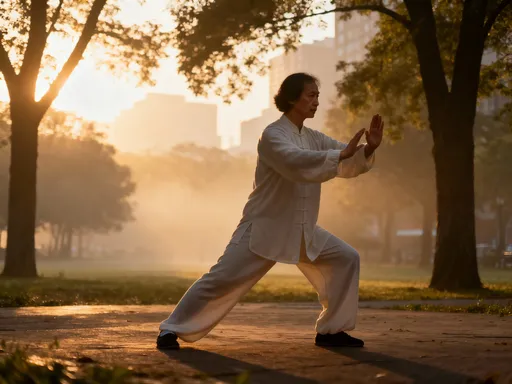
Despite its growing popularity, qigong is often misunderstood. It is not a religion, nor does it require any spiritual belief system to benefit from its effects. Practitioners of all backgrounds, including those with no interest in Eastern philosophy, report improvements in energy levels and emotional stability. It is also not a performance art or martial display. Unlike tai chi forms that may emphasize fluidity and precision for demonstration, qigong prioritizes internal sensation over external appearance. A person practicing qigong may appear to be moving slowly or even standing still, but internally, significant shifts are occurring.
Another common misconception is that qigong works solely through the placebo effect. While mindset plays a role in any wellness practice, research has documented measurable changes in biomarkers such as heart rate variability, cortisol levels, and immune function following qigong practice. These outcomes suggest a direct physiological impact beyond belief alone. Importantly, qigong is not about achieving perfection in form. There is no single “correct” way to move—what matters is consistency, intention, and attention. This makes it uniquely accessible, especially for women managing busy households or recovering from injury, who may find other forms of exercise too demanding.
How Science Sees Qigong: From Anecdote to Evidence
Once regarded as a fringe practice, qigong has increasingly drawn attention from the scientific community. Over the past two decades, numerous peer-reviewed studies have explored its effects on both mental and physical health. One consistent finding is its ability to reduce cortisol, the primary stress hormone. A 2013 meta-analysis published in the journal Alternative Therapies in Health and Medicine reviewed 23 clinical trials and concluded that qigong significantly lowers cortisol levels, particularly in individuals with high baseline stress. This reduction correlates with improved mood, better sleep quality, and decreased perceived anxiety.
Another key area of research involves heart rate variability (HRV), a marker of autonomic nervous system balance. Higher HRV indicates greater resilience to stress and better cardiovascular health. Studies using electrocardiogram monitoring have shown that regular qigong practice increases parasympathetic tone—the branch of the nervous system responsible for rest and recovery. For example, a 2016 randomized controlled trial involving middle-aged women found that those who practiced qigong for eight weeks experienced significant improvements in HRV compared to a control group. These changes occurred without any dietary or medication interventions, underscoring the power of movement and breath alone.
Neuroimaging research further supports these findings. Functional MRI studies have observed increased activity in brain regions associated with self-awareness, emotional regulation, and attention during and after qigong sessions. These changes resemble those seen in mindfulness meditation, but with the added benefit of gentle physical engagement. Additionally, clinical trials have documented qigong’s positive impact on conditions such as chronic fatigue, hypertension, and osteoarthritis. While it is not a replacement for medical treatment, it serves as a valuable complementary approach, particularly for managing symptoms and improving quality of life.
The Body-Mind Connection: Why Movement + Breath Matters
The power of qigong lies in its integration of movement and breath—a combination that directly influences the autonomic nervous system. When physical motion is synchronized with slow, deep breathing, it stimulates the vagus nerve, the longest cranial nerve and a key component of the parasympathetic nervous system. This nerve acts like a biological brake, slowing heart rate, lowering blood pressure, and promoting digestion and relaxation. By activating the vagus nerve, qigong helps shift the body from a state of hyperarousal to one of calm alertness.
This shift is not merely subjective. Physiological markers confirm the transition from “fight-or-flight” to “rest-and-digest.” During qigong practice, respiration slows, oxygen exchange becomes more efficient, and muscle tension decreases. Blood flow improves, particularly to the brain and digestive organs, supporting cognitive function and nutrient absorption. At the same time, the brain receives fewer stress signals, allowing the prefrontal cortex—the area responsible for decision-making and emotional control—to function more effectively. This explains why many practitioners report feeling more centered and less reactive after even a short session.
An apt analogy is tuning a musical instrument. Just as a violin must be adjusted to produce harmonious sound, the body’s internal systems require regular calibration to function optimally. Stress, poor sleep, and sedentary lifestyles cause disharmony—like strings pulled too tight or too loose. Qigong acts as a tuning mechanism, gently bringing the nervous, endocrine, and muscular systems back into alignment. The movements may appear simple, but their cumulative effect is profound. Over time, the body learns to return to balance more quickly, even in the face of external pressures. This resilience is not built overnight, but through consistent, mindful practice.
Real Results: What Changes After Weeks of Practice
The benefits of qigong often emerge gradually, which is why tracking subtle shifts is crucial. Within the first few weeks of regular practice, many women notice improvements in sleep quality. They fall asleep more easily, wake less frequently during the night, and feel more refreshed in the morning. This is not coincidental—qigong’s calming effect on the nervous system helps regulate the circadian rhythm, supporting the natural sleep-wake cycle. Better sleep, in turn, enhances mood, energy, and cognitive performance during the day.
Another commonly reported change is reduced muscle tension, particularly in the neck, shoulders, and lower back—areas where stress often accumulates. The gentle stretching and weight-shifting movements in qigong promote blood flow and release chronic tightness without strain. Unlike intense stretching or massage, which may provide temporary relief, qigong teaches the body to maintain a relaxed posture throughout daily activities. Over time, this leads to improved posture, decreased discomfort, and greater physical ease.
Mental clarity and emotional regulation also improve with consistent practice. Women often describe feeling less overwhelmed, more patient with family members, and better able to handle unexpected challenges. These changes reflect the strengthening of neural pathways associated with self-regulation. Rather than reacting impulsively to stress, practitioners develop a pause—a moment of awareness before responding. This small space makes a significant difference in daily life. Additionally, many report increased stamina and a general sense of vitality, likely due to improved oxygenation and energy efficiency at the cellular level.
How to Start Without Overthinking It
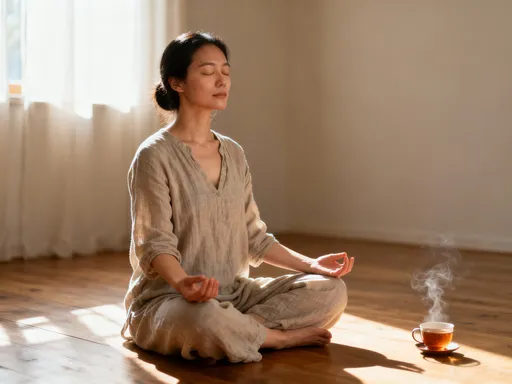
One of the greatest barriers to beginning qigong is the belief that it requires special knowledge, equipment, or a large time commitment. The truth is, anyone can start with just five minutes a day. A simple morning routine can include three foundational movements: “Lifting the Sky,” “Separating Heaven and Earth,” and “Gentle Swaying.” These exercises involve slow, flowing motions that coordinate with deep breathing, making them easy to learn and remember. They require no space beyond a small area in front of a window or in a quiet corner of the home.
To build consistency, it helps to link the practice to an existing habit. For example, doing a short qigong sequence after brushing teeth or while waiting for the coffee to brew creates a natural cue. This habit-stacking technique increases the likelihood of adherence. It’s also helpful to begin at the same time each day, as regularity strengthens the neural pathways associated with the behavior. There’s no need to aim for perfection—simply showing up and moving with awareness is enough.
For guidance, several free, science-aligned resources are available. Reputable organizations such as the National Qigong Association and the American College of Lifestyle Medicine offer beginner videos and instructional materials. Mobile apps like Insight Timer and Breethe include qigong-specific guided sessions led by certified instructors. These tools provide structure without pressure, allowing users to explore different styles and find what resonates. The key is to start small and stay consistent, letting the practice grow naturally over time.
Making It Last: From Trial to Lifestyle
Like any new habit, maintaining a qigong practice can face challenges. The most common drop-off point occurs between two and six weeks in, when initial enthusiasm fades and results may still feel subtle. This is normal. The body and mind require time to adapt, and progress is often nonlinear. To overcome this phase, it helps to focus on process rather than outcome. Instead of waiting for dramatic changes, practitioners are encouraged to notice small wins: a moment of calm during a hectic day, a deeper breath during a tense conversation, or fewer headaches over the week.
Tracking these micro-improvements reinforces motivation. Keeping a simple journal or using a habit-tracking app can provide visual proof of consistency and progress. It’s also important to be flexible—missing a day doesn’t mean failure. What matters is returning to the practice without self-criticism. Women who sustain qigong over months often describe it as a form of self-care that doesn’t feel like an obligation. It becomes a welcome pause in the day, a moment to reconnect with oneself.
Over time, qigong can evolve from a daily exercise into a lifestyle anchor. It fosters a mindset of presence and intention, influencing other areas of life—how one eats, communicates, and responds to stress. The practice doesn’t demand more time; rather, it enhances the quality of the time one already has. By prioritizing slowness in a culture that values speed, women reclaim agency over their well-being. This quiet act of self-investment pays dividends in energy, resilience, and emotional balance.
Qigong isn’t a cure-all, but it’s a powerful tool grounded in both tradition and science. By aligning breath, movement, and attention, it supports the body’s natural ability to rebalance and renew. In a world that glorifies speed, choosing slowness can be revolutionary. With minimal time and no equipment, anyone can begin enhancing their well-being—one mindful breath at a time.