Why My Joints Hurt More After Working Out — And What I Learned the Hard Way
You’re not alone if you’ve ever felt joint pain after hitting the gym. I thought exercise was supposed to help — until I made mistakes that worsened my joint discomfort. Through trial, error, and real talk with my doctor, I discovered how certain workouts can secretly harm your joints. This is what I wish I knew earlier: not all exercise is created equal when it comes to joint health. What felt like progress turned out to be slow damage, and the turning point came not from pushing harder, but from learning when to pull back, adjust, and protect what matters most — long-term mobility and comfort in everyday life.
The Painful Wake-Up Call: When Exercise Backfired
Like many women in their 30s and 40s, I began a fitness journey with excitement and determination. I wanted more energy, better sleep, and to feel strong in my body again. I started with group classes, running, and home strength videos — all popular, all promoted as healthy. At first, the soreness felt like proof I was doing something right. But soon, the ache in my knees didn’t fade after a day or two. It lingered. Then came the stiffness in my hips when I stood up from the couch, and the sharp twinge in my shoulders when lifting grocery bags.
The real wake-up call happened one morning when I struggled to climb the stairs to my daughter’s room. My knees creaked and burned with each step. That moment hit me hard — I was trying to get healthier, yet simple daily movements were becoming harder. I had believed the idea that pushing through discomfort was part of progress. I told myself, If it doesn’t break you, it makes you stronger. But joints don’t respond the same way muscles do. Unlike muscle tissue, which grows stronger with stress, joints can deteriorate under repeated strain — especially when form, frequency, or intensity aren’t managed wisely.
It wasn’t until I saw a physical therapist that I realized I had been ignoring early warning signs for months. The occasional clicking, the morning stiffness, the dull ache after workouts — these weren’t normal parts of aging or fitness. They were signals. My body wasn’t asking me to push harder. It was asking me to pay attention. The biggest mistake I made was assuming that any movement was good movement. But not all exercise supports joint health. Some types, especially when done incorrectly or too often, can accelerate wear and contribute to long-term discomfort.
Why Joints Suffer: The Science Behind Exercise-Related Stress
To understand why my joints hurt, I first had to learn what they actually do. Joints are more than just connection points between bones — they are complex structures designed for smooth, pain-free movement. Each joint, whether in the knee, hip, or shoulder, relies on a combination of cartilage, synovial fluid, ligaments, and surrounding muscles to function properly. Cartilage acts as a cushion, absorbing shock and preventing bones from rubbing together. Synovial fluid lubricates the joint, allowing it to glide with minimal friction. When these components are healthy, movement feels effortless.
But exercise can disrupt this delicate balance. High-impact activities like running on concrete, jumping, or rapid directional changes place repeated force on the joints. Over time, this can lead to micro-damage in the cartilage. Unlike skin or muscle, cartilage has no blood supply, so it repairs very slowly — if at all. Once it begins to thin, the risk of bone-on-bone contact increases, leading to pain and inflammation. This is why joint pain often appears gradually; the damage accumulates silently over months or even years.
The difference between healthy joint loading and harmful strain lies in control and repetition. Weight-bearing exercise, when done correctly, strengthens the muscles around the joint and supports long-term joint stability. But when form is poor or impact is excessive, the joint itself absorbs more force than it should. For example, landing hard from a jump places up to five times your body weight on the knee joint. Repeating that motion hundreds of times in a workout adds up quickly. Inflammation becomes chronic, swelling occurs, and the joint’s natural lubrication decreases — creating a cycle of discomfort and reduced mobility.
Another key factor is alignment. Joints work best when they move in their intended range. Misalignment — caused by muscle imbalances or improper technique — forces certain areas to bear more pressure. For instance, if the hips are weak, the knees may cave inward during squats or lunges, placing abnormal stress on the inner knee. This uneven wear can lead to conditions like patellofemoral pain syndrome, a common but preventable cause of knee discomfort in active women. Understanding this science helped me see that joint pain isn’t just bad luck — it’s often the result of choices we can change.
The Top Exercise Pitfalls That Damage Joints
Looking back, I realized I had fallen into several common traps that many fitness enthusiasts unknowingly repeat. The first was overdoing high-impact activities. I loved running because it gave me a sense of freedom and mental clarity. But I was doing it daily on pavement, without proper shoes or recovery. Hard surfaces like concrete transmit more shock to the joints than softer terrain like dirt or grass. Over time, this repetitive pounding wore down my knee cartilage and aggravated the joint lining. Jump training, another favorite, added explosive force that my joints weren’t ready to handle — especially as I approached my 40s, when natural joint fluid begins to decline.
Another major mistake was poor technique in strength training. I focused on how many reps I could do, not how well I was doing them. I didn’t realize that letting my knees collapse inward during squats or flaring my elbows during push-ups placed dangerous stress on vulnerable joints. Without proper alignment, the load shifts from the muscles — which are meant to handle it — to the joints themselves. This is especially risky for the shoulders and knees, which are built for mobility but need strong muscular support to stay stable. I was building strength in some areas while weakening others, creating imbalances that pulled my joints out of alignment.
I also ignored the importance of warm-ups and recovery. I treated my body like a machine that could start at full speed without preparation. Cold joints are stiffer and less lubricated, making them more prone to strain. Skipping dynamic warm-ups meant I was asking stiff tissues to perform under load — a recipe for micro-injury. And I didn’t prioritize rest. I thought rest days were for the weak, not realizing that joint repair happens during recovery, not during the workout. Without sufficient downtime, inflammation built up, and small issues became chronic problems.
Finally, I underestimated the role of muscle imbalances. Life — especially motherhood and desk work — creates postural habits that affect how we move. Sitting for long periods tightens the hip flexors and weakens the glutes, which changes how we walk, run, and squat. When these imbalances go uncorrected, they force joints to compensate. For example, weak glutes can cause the knees to take on extra work during stairs or lunges, increasing wear. Recognizing these pitfalls wasn’t about blaming myself — it was about gaining control. Once I saw the patterns, I could change them.
Misguided Goals: Chasing Intensity Over Sustainability
One of the hardest truths I had to face was that my fitness goals were shaped more by social media than by my body’s needs. I saw women doing advanced workouts — heavy lifts, fast sprints, intense HIIT sessions — and assumed that’s what real fitness looked like. I wanted to keep up, to prove I was strong and capable. But in chasing intensity, I lost sight of sustainability. I measured success by how hard I worked, not by how I felt the next day. If I could barely walk after a workout, I told myself I had earned it. But joint pain isn’t a badge of honor — it’s a warning.
The fitness culture I followed glorified pushing through discomfort. Phrases like no pain, no gain and just one more rep were everywhere. But these slogans don’t distinguish between muscle fatigue — which is temporary and healthy — and joint pain, which can signal damage. I learned the hard way that joints don’t adapt by getting stronger under stress; they degrade. And once cartilage is damaged, it doesn’t grow back. The pressure to perform, to post, to compare — it all fed an ego-driven approach to exercise that put my long-term health at risk.
Changing my mindset meant redefining what success looked like. Instead of lifting the heaviest weight, I began to value control and smooth movement. Instead of running the fastest mile, I focused on how my body felt during and after. I started asking myself: Is this movement helping me move better in daily life? Can I play with my kids, garden, or carry groceries without pain? These became my new benchmarks. Long-term mobility — the ability to stay active and independent for decades — became more important than short-term achievements.
Letting go of intensity as the primary goal was liberating. I discovered that gentler forms of exercise could be just as effective, if not more so, for building strength and endurance. Walking, swimming, and slow strength training didn’t make me feel weak — they made me feel resilient. I wasn’t giving up on fitness; I was upgrading it. By prioritizing joint-friendly movement, I was investing in a future where I could stay active well into my 50s, 60s, and beyond — not just surviving workouts, but thriving in everyday life.
Smarter Movement: Joint-Friendly Exercise Principles
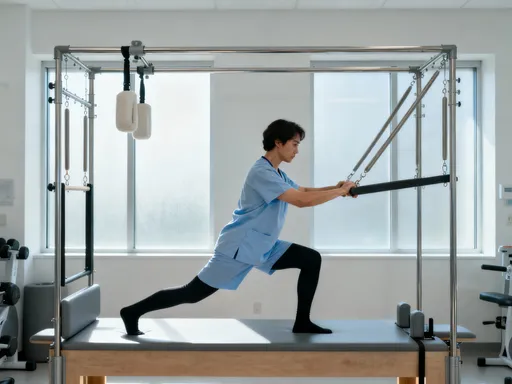
Once I understood what was harming my joints, I focused on what could protect them. The foundation of joint-smart exercise is control. Moving with intention — slower, smoother, and with full range of motion — reduces unnecessary strain. I learned that quality always trumps quantity. Ten perfect squats with proper alignment do more for joint health than twenty sloppy ones. I began paying attention to my form in the mirror, recording my workouts, and even working with a trainer to correct imbalances.
I also shifted to low-impact cardio. Swimming became a favorite — the water supports the joints while still providing resistance for muscle building. Cycling, especially on a stationary bike with proper seat height, allowed me to get my heart rate up without pounding my knees. The elliptical machine offered a similar benefit, mimicking running motion without the impact. These activities kept me fit without sacrificing joint comfort. I didn’t have to stop moving — I just had to move differently.
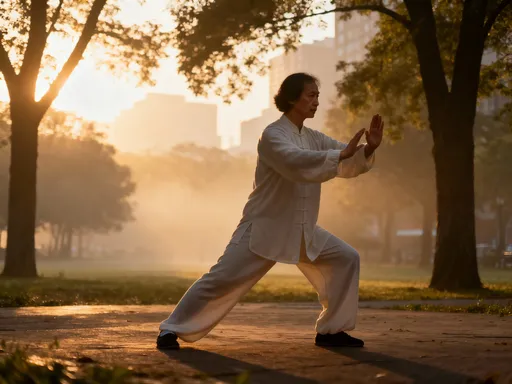
Mobility work became a non-negotiable part of my routine. I started each day with gentle range-of-motion exercises: shoulder circles, ankle rolls, hip openers. These small movements stimulate synovial fluid production, warming up the joints and preparing them for activity. I added yoga and tai chi for flexibility and balance, both of which support joint stability. Strength training didn’t disappear — it evolved. I focused on full-body, functional movements that built balanced muscle support around the joints. Exercises like glute bridges, step-ups, and resistance band rows strengthened the muscles that protect the knees, hips, and shoulders without overloading the joints themselves.
Another key principle was progression. I stopped trying to do too much too soon. Instead, I followed a gradual approach — increasing intensity, duration, or weight only when my body showed it was ready. This meant listening, adjusting, and sometimes stepping back. But the results were lasting. My joints felt more stable, my movements became smoother, and the constant background ache faded. I wasn’t just exercising — I was building a body that could move well for the long haul.
Listening to Your Body: The Most Important Workout Tool
Perhaps the most valuable lesson I learned was how to listen to my body. We’re often taught to ignore discomfort, to power through. But when it comes to joints, pain is not weakness leaving the body — it’s a signal that something is wrong. I began to distinguish between muscle fatigue, which feels like a deep burn or tiredness that fades in a day, and joint pain, which is sharper, more localized, and often accompanied by stiffness or swelling. Muscle soreness is normal; joint pain is not.
I started tracking how my joints felt each morning. Was there stiffness? Did my knees click when I stood up? Did my shoulders feel tight? These small cues helped me adjust my workouts in real time. If my knees were stiff, I’d skip squats and focus on mobility and upper-body work. If my hips felt tight, I’d add extra stretching and avoid high-impact activities. This wasn’t about being fragile — it was about being smart. Rest and active recovery, like walking or gentle yoga, became part of my strategy, not signs of failure.
Learning to honor my body’s feedback changed my relationship with fitness. I no longer saw rest days as wasted days. I understood that recovery is when healing happens — when inflammation calms, tissues repair, and joints rehydrate. I began scheduling rest intentionally, just like I scheduled workouts. I also paid attention to sleep, hydration, and nutrition, knowing they all support joint health. Omega-3 fatty acids, found in fish and flaxseeds, helped reduce inflammation. Staying hydrated kept my synovial fluid levels optimal. And quality sleep allowed my body to repair itself overnight.
By tuning in, I avoided setbacks. I stopped waiting for pain to become severe before making changes. I treated my joints with respect, not as tools to be used up, but as essential parts of a body I wanted to care for. This shift didn’t make me less active — it made me more sustainable. I moved with more awareness, more gratitude, and more joy.
Building a Joint-Smart Fitness Routine: Practical Steps
Creating a joint-friendly routine didn’t happen overnight. It started with an assessment. I consulted a physical therapist who evaluated my posture, movement patterns, and muscle imbalances. This professional insight helped me understand my body’s unique needs. If you’re experiencing joint discomfort, seeking expert guidance early can prevent long-term issues. A certified trainer or physical therapist can correct form, suggest modifications, and design a program tailored to your goals and limitations.
My current weekly plan balances strength, mobility, cardio, and rest. I strength train three times a week, focusing on compound movements with controlled tempo. I do low-impact cardio four times a week — swimming, cycling, or brisk walking — for 30 to 45 minutes. Daily mobility drills take just 10 to 15 minutes but make a noticeable difference in how I feel. I also schedule two full rest days, using one for light walking or stretching. This rhythm keeps me active without overloading my joints.
Small habits make a big difference. I wear supportive shoes, especially during workouts, and avoid exercising on hard surfaces when possible. I warm up for at least five minutes before every session and cool down afterward. I stay hydrated throughout the day and prioritize sleep — aiming for seven to eight hours nightly. Nutrition plays a role too; I include anti-inflammatory foods like berries, leafy greens, nuts, and fatty fish in my meals. I don’t rely on supplements unless recommended by my doctor, and I avoid unproven joint “cures” marketed online.
Finally, I know when to seek help. If joint pain persists for more than a few days, worsens with activity, or limits daily function, I don’t wait. Early intervention can prevent minor issues from becoming chronic conditions. Whether it’s physical therapy, medical evaluation, or simply adjusting my routine, taking action early has kept me moving pain-free. Joint health isn’t about perfection — it’s about consistency, awareness, and respect.
Joint health isn’t about avoiding exercise — it’s about doing the right kind. The goal isn’t just to move, but to move well for decades to come. By respecting your joints and ditching harmful habits, you invest in a future of pain-free movement. This isn’t a quick fix; it’s a lasting promise to your body.